

Why expected payback periods and/or savings, will be different to what was quoted.
The expected savings and payback period on your solar system are calculated on a number of factors; your cost of electricity, feed-in tariff rate, how much and when you use your electricity (day/night), your location, and the cost of your solar system. Adding a battery bank into that equation will also change things.
Some of these factors can be confidently estimated at the time of quoting, whilst others are subject to change outside of your and our control. If any of these factors do change after we’ve provided you with your quotation, the estimated savings or payback periods we’ve indicated on your quote will no longer be correct.
What will my Feed-In Tariff be?
Feed-in tariffs (FIT) are the amount of money you are paid by your electricity retailer for any electricity you export back into the mains power grid. Each retailer has a different FIT and can change their rates as they please. Your retailer will either place you on their standard FIT rate or may contact you to negotiate a rate.
What is an Export Limit?
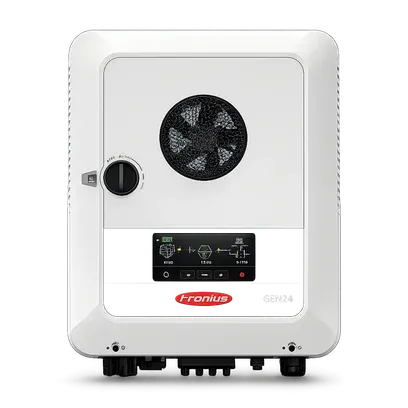
Most Distributors these days are allowing larger capacity inverters to be installed, as long as the inverter is ‘Export Limited’ to an appropriate level. The export limit is a restriction that is programmed into the inverter at the time of installation, to prevent the inverter from exporting more than a certain level of power into the mains grid at any time. This restriction will mean that you might be prevented from exporting a small amount of energy into the mains grid, and therefore lose a small amount of FIT.