
Resources/About
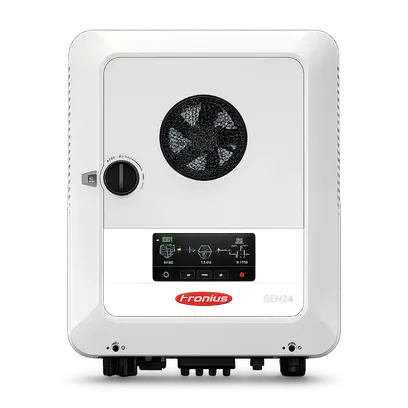
Explore company information, rebates, guides, blogs and helpful resources designed to support your renewable energy journey.
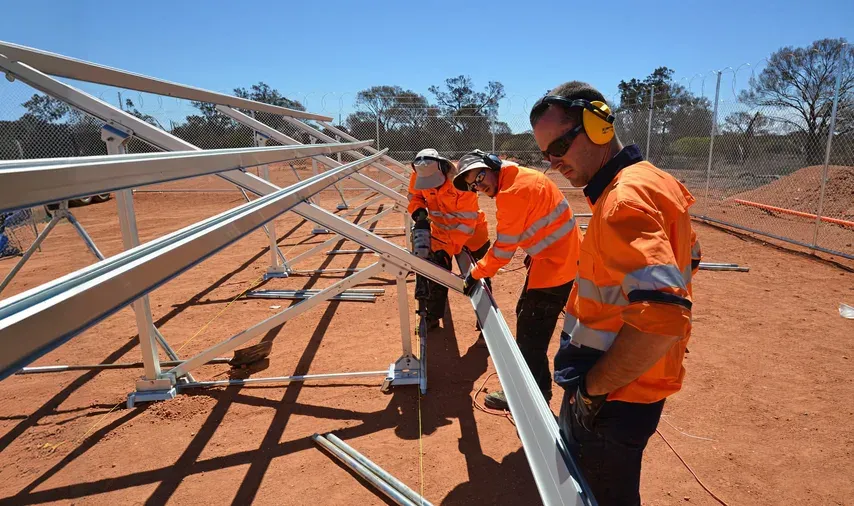
Learn more about our experience, team, and commitment to delivering reliable renewable energy solutions across Australia.
Find answers, expert guides, and energy insights covering battery systems, efficiency tips, and renewable energy sessions.
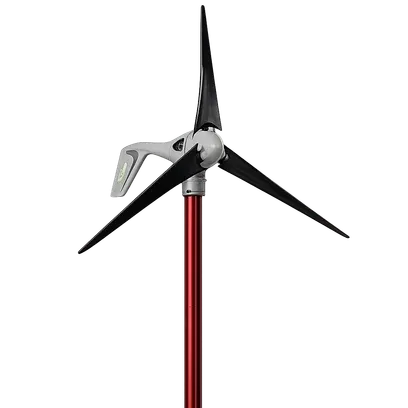
Explore the latest articles, industry insights, energy tips, and renewable technology updates from our expert team.
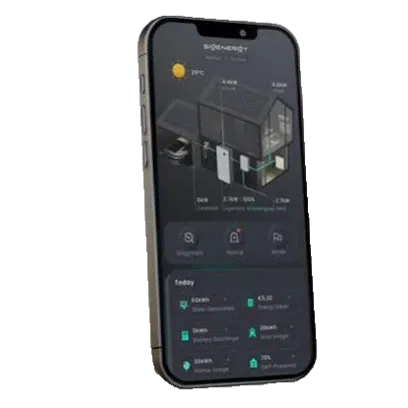
Access support guides, troubleshooting resources, and helpful information to manage your Off-Grid Energy system with confidence.
Read what our customers say about working with us and living with their Off-Grid Energy system.
Get in touch with our team about a new system, a quote, or support for the system you already have.
Off-Grid solar system costs
What an off-grid solar system costs in Australia, set out by system size. Our installed prices start from $15,600 for a shed system, and most standard family homes pay $40,000 to $65,000. Both figures include rebates.
Prices are a guide only. Your quote depends on how much power you use and what your site needs.
Off-grid solar system cost by system size
We size every system to your daily energy use, measured in kilowatt-hours (kWh) a day. That figure sets the size of the battery bank, the solar array and the inverter/charger, so it's the biggest single driver of what you'll pay. Here's where each of our four off-grid systems starts.
| System | Daily energy use | Suits | Starts from | What most homes pay |
|---|---|---|---|---|
| Shed Power System | 4 to 9 kWh a day | Sheds, workshops and live-in sheds | $15,600 | $16,000 to $20,000 |
| Essential Power System | 10 to 19 kWh a day | Holiday homes, cabins and efficient dwellings | $20,200 | $25,000 to $35,000 |
| Complete Power System | 20 to 49 kWh a day | Family homes, small businesses, stations and farms | $29,100 | $40,000 to $65,000 |
| Comprehensive Power System | 50+ kWh a day | Large homes, farms and accommodation | $60,000 | $70,000 and over |
The starting price is for a basic system at the bottom of each size band. Most homes need a bit more, which is what the second column shows. All prices include rebates and are a guide only. They're for standard installations with customer-provided site preparation and infrastructure.
Not sure which band you're in? Use the energy usage selector further down this page. Move the slider to your daily use, or work it out from a power bill, and it shows the system that fits.
What moves the price of an off-grid system
Two properties using the same energy each day can still end up with different quotes. These are the things that move the number.
How much power you use, and when
Daily energy use sets the size of the system. Peak loads matter too. A pump, a welder or an air conditioner starting up needs an inverter/charger with enough surge capacity, which is why our Comprehensive system is rated for 15,000W+ continuous output and 33,000W+ surge.
Battery storage
The battery bank carries your property through the night and through runs of cloudy weather. The more energy you use after dark, and the longer you want to run without the generator, the bigger it needs to be. Our Shed system, for example, takes up to 10.4 kWh of lithium iron phosphate (LFP) storage, and the larger systems scale up from there.
Solar array size
More solar means more of your power comes from the sun and less from the backup generator. Maximising your renewable energy sources keeps ongoing generator costs down, and it also changes how much rebate the system attracts (see below).
Backup generator
Most off-grid systems include a backup generator for long stretches of poor weather or unusually heavy use. Its size and fuel type affect the price, and so does how often the system is designed to need it. You can read more on ouroff-grid generators page.
Where the equipment lives
The inverter/charger and batteries need a suitable place to live. For sites that don't have a suitable enclosure to house our AdaptUnit, the EnergyBox might be required at an additional cost.
Site preparation and access
Our prices assume customer-provided site preparation and infrastructure. Long cable runs between the solar array and the house, and remote or difficult access, can add to the installed cost.
Why off-grid solar costs more than grid-connected solar
A grid-connected solar system can lean on the grid at night and on cloudy days. An off-grid system can't, so it has to do everything itself: generate enough power in winter, store enough to get through the night, and start a backup generator when the batteries run low. That means a larger battery bank, a bigger inverter/charger and a generator, none of which grid-connected solar needs.
In return you have no electricity bills and no supply charges. For a property with no power on site, extending the grid can be a large cost in itself, so it's worth comparing a price for both.
How to keep the cost of an off-grid system down
The cheapest kilowatt-hour is the one you don't need to store. Most of the savings come from how you use power, and they're decided before the system is designed, so it pays to think about them early.
Run heavy loads while the sun is up
Pumps, washing machines, dishwashers and workshop tools running in the middle of the day are powered straight from the solar array. The same loads at night have to come out of the batteries. Moving them into daylight hours means a smaller battery bank can do the same job.
Look hard at the biggest loads
Electric heating, older fridges and freezers, and pool pumps can account for a large share of a property's daily use. More efficient appliances, or a different fuel for heating and hot water, can drop a property into a smaller system size, and the saving on the system can be bigger than the cost of the appliance.
Get the load profile right
An accurate picture of what you run and when stops a system being oversized "just in case". It also stops it being undersized, which costs more in generator fuel over the years than it saves up front. Our team builds the load profile with you before we design anything.
Sort out the site early
Because our prices assume customer-provided site preparation and infrastructure, planning where the solar array, batteries and generator will go, and how the cabling gets between them, keeps the installation straightforward.
Do rebates apply to off-grid systems?
Yes. Federal government rebates exist for eligible applicants, ranging from $1,700 to $30,000 depending on how much renewable energy is included in the final system. They're paid as small-scale technology certificates (STCs), and we can handle the paperwork for you.
Read how solar STCs and theCheaper Home Batteries Program work, or see everysolar and battery rebate by state.
How to get an accurate price for your property
- Contact. Call our team on 1300 334 839 or fill out the quote form below.
- Assess. We assess your energy requirements and what you want the system to do.
- Design. We design a system to suit your usage, your objectives and your site requirements.
- Quote. You get a quote for that design.
A load profile is the most useful thing you can bring: the appliances you run, roughly when you run them, and any big loads like pumps, workshops or air conditioning. If you're replacing a grid connection, a year of power bills does the same job.
Common questions about off-grid costs
Is an off-grid solar system worth it?
It depends on your site. If you're building where there's no grid, off-grid is often the obvious choice. If you already have a good grid connection, in most cases it's better to keep it as a backup to a grid-connected solar and battery system, such as our Autonomy orGrid Support systems.
Can I disconnect my house from the grid?
Yes, you can disconnect from the electricity grid in Australia. It involves extra costs and paperwork, and the requirements vary between retailers and network businesses. Ourgrid defection page explains how we design the system and guide you through having the meter removed.
What does an off-grid system cost to run?
Mostly fuel and servicing for the backup generator. The more of your energy comes from solar, the less the generator runs, which is why we design each system around your load profile and your site.
Last updated 5 November 2026.
Find your system
How much energy does your property use?
Move the slider to your average daily energy use, type it in, or work it out from your power bill. We'll show the Off-Grid Energy system that usually fits.
Average daily energy use
Typical family home energy usage
Work it out from my power bill
Enter your bill total to see your daily use.
Rates vary between retailers and states. Both figures are on your bill, usually labelled "usage" or "peak" (c/kWh) and "supply charge" ($/day). The defaults are rough Australian averages, so swap in your own for a closer answer.
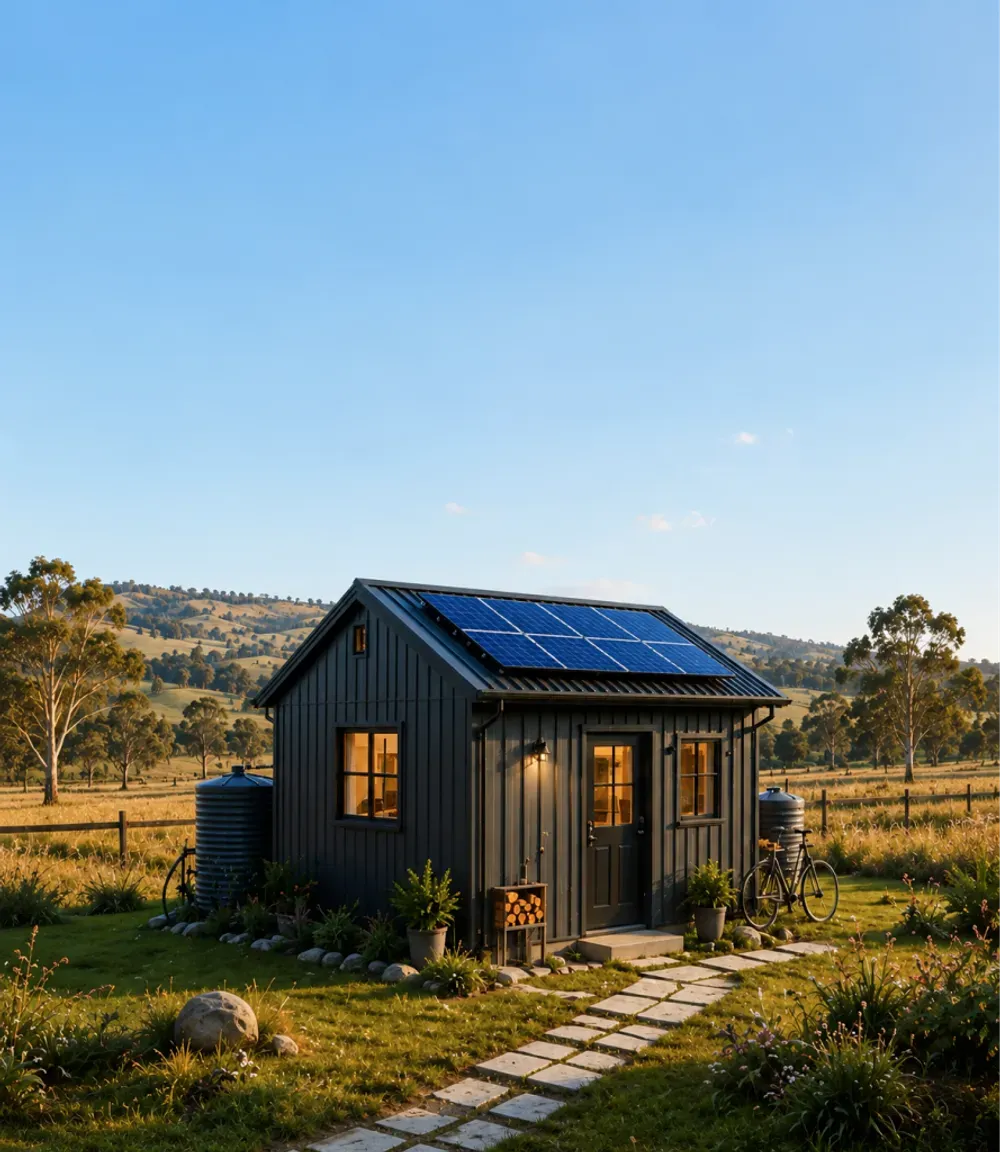
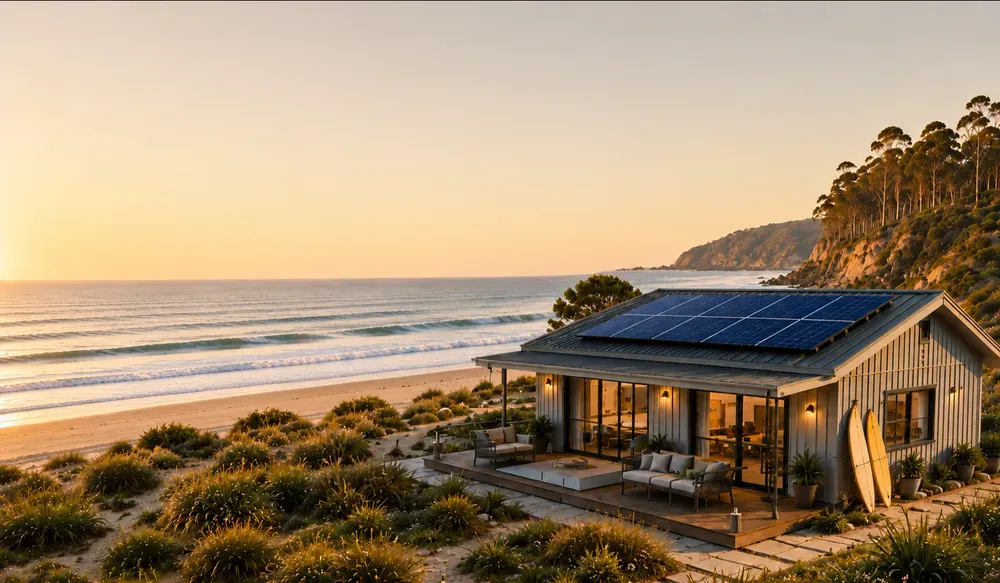
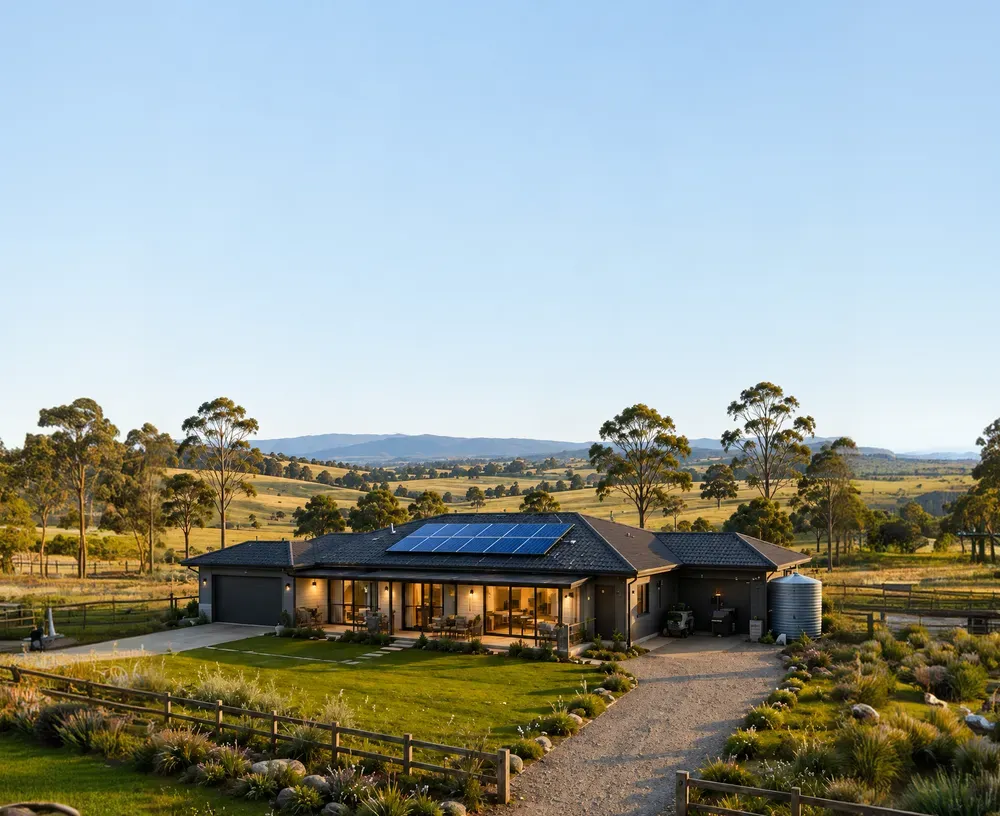
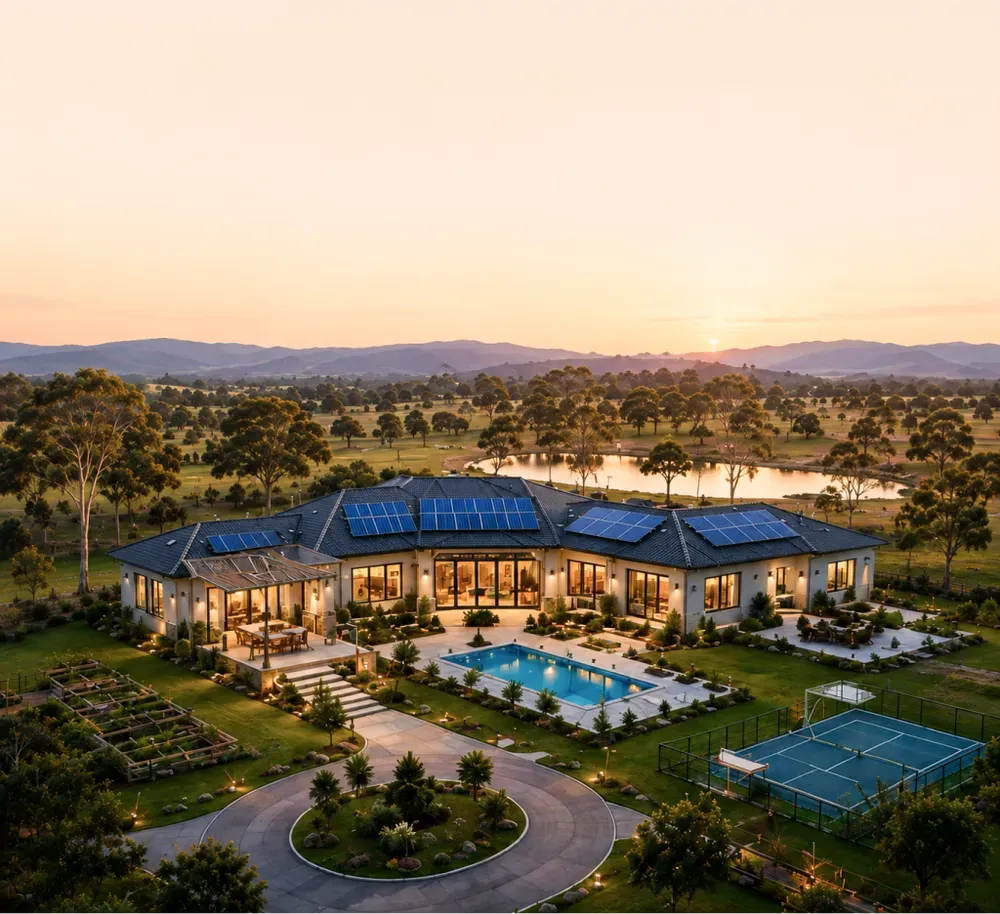
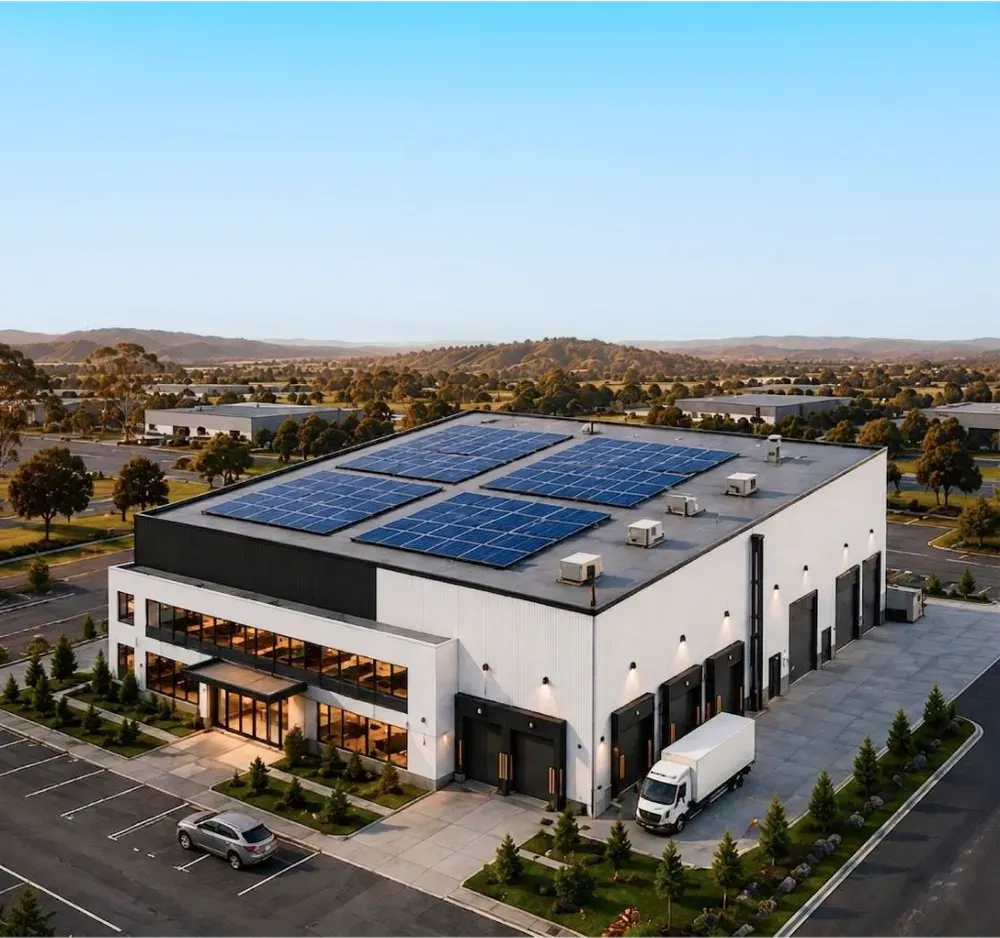
20-49 kWh
Complete Power System
Homes, farms, stations, small businesses
Suits properties using around 20-49 kWh a day.
This selector is an indicative guide based on average daily energy use. Final off-grid system sizing should consider your full load profile, peak demand, location, seasonal conditions and required autonomy.
System sizes
Off-Grid system sizes
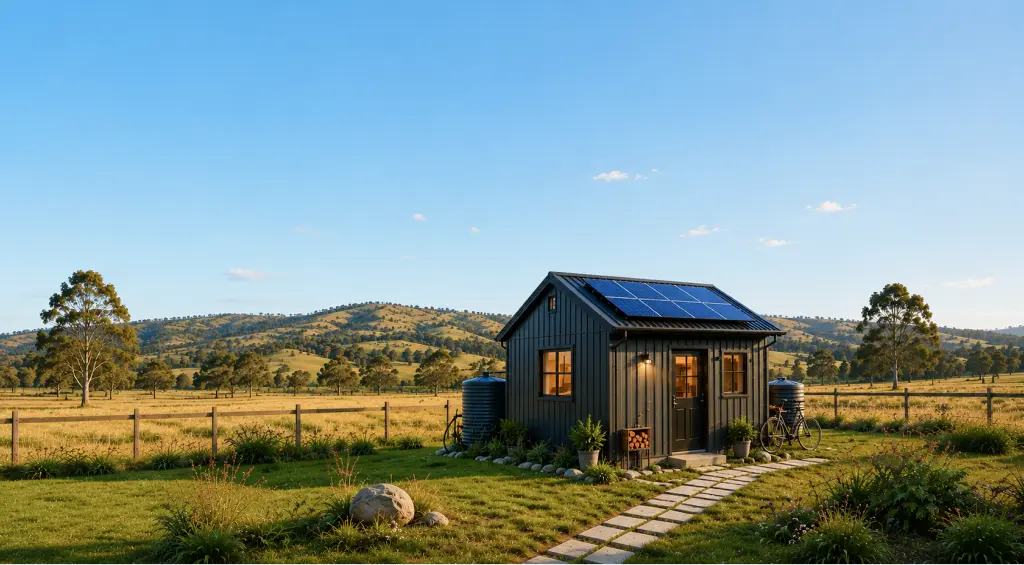
Off-Grid

4 - 9kWh
Shed Power System
Man Cave, Live-In Shed, Workshop, Tiny Home
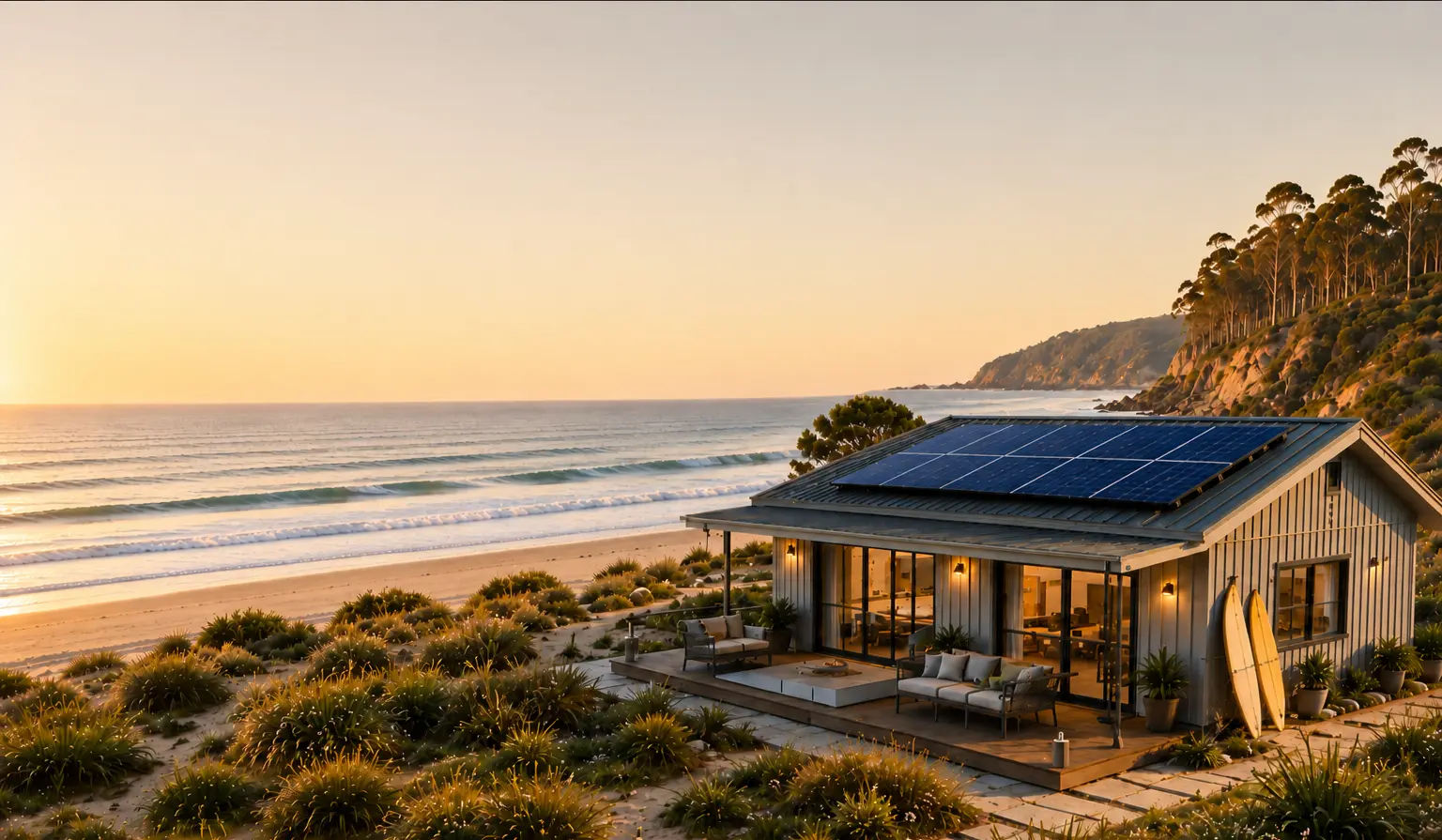
Off-Grid
10 - 19 kWh
Essential Power System
Holiday Homes, Efficient Dwellings, Weekends
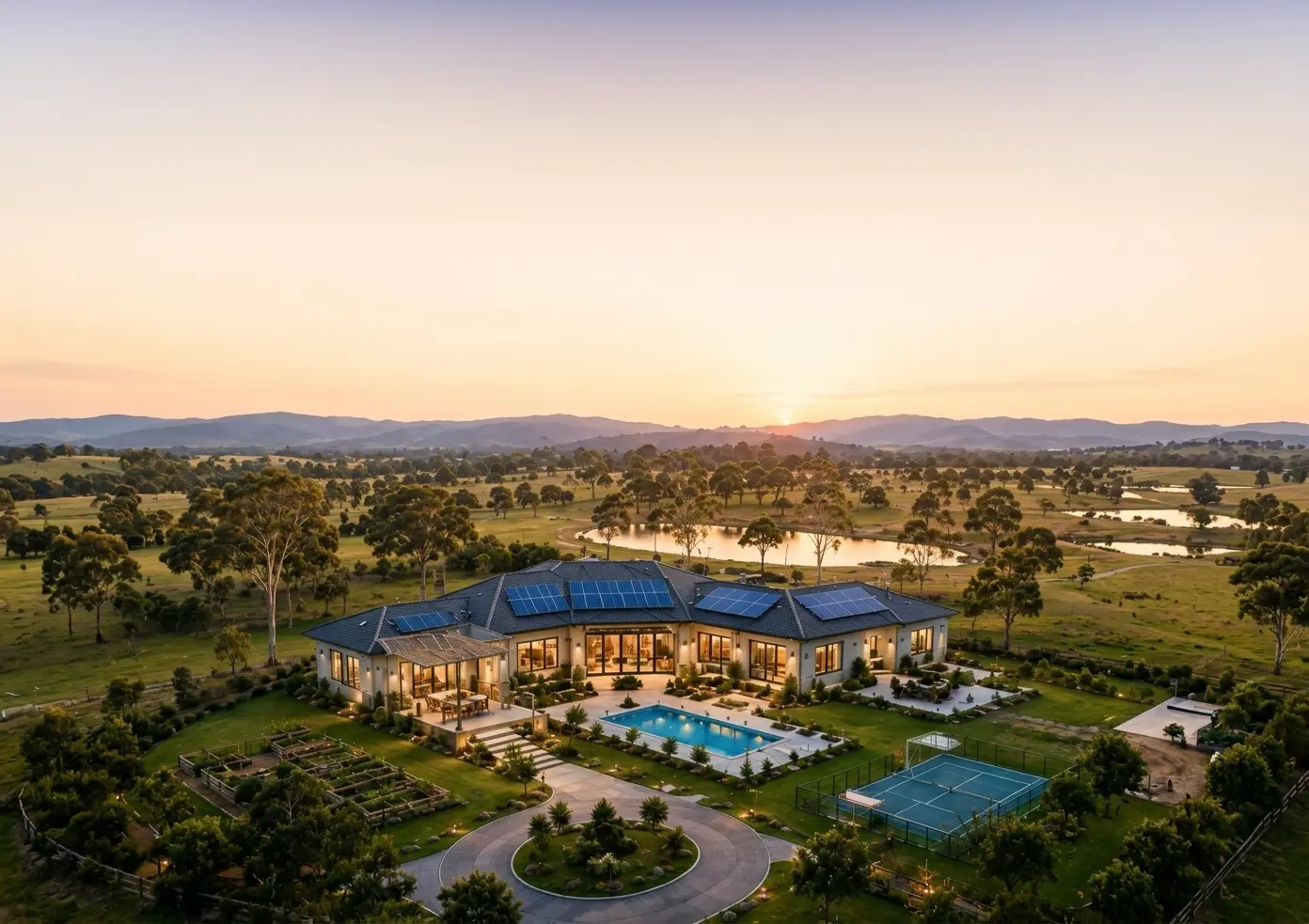
Off-Grid
50+ kWh
Comprehensive Power System
Large Homes and Properties, Accommodation, Communities
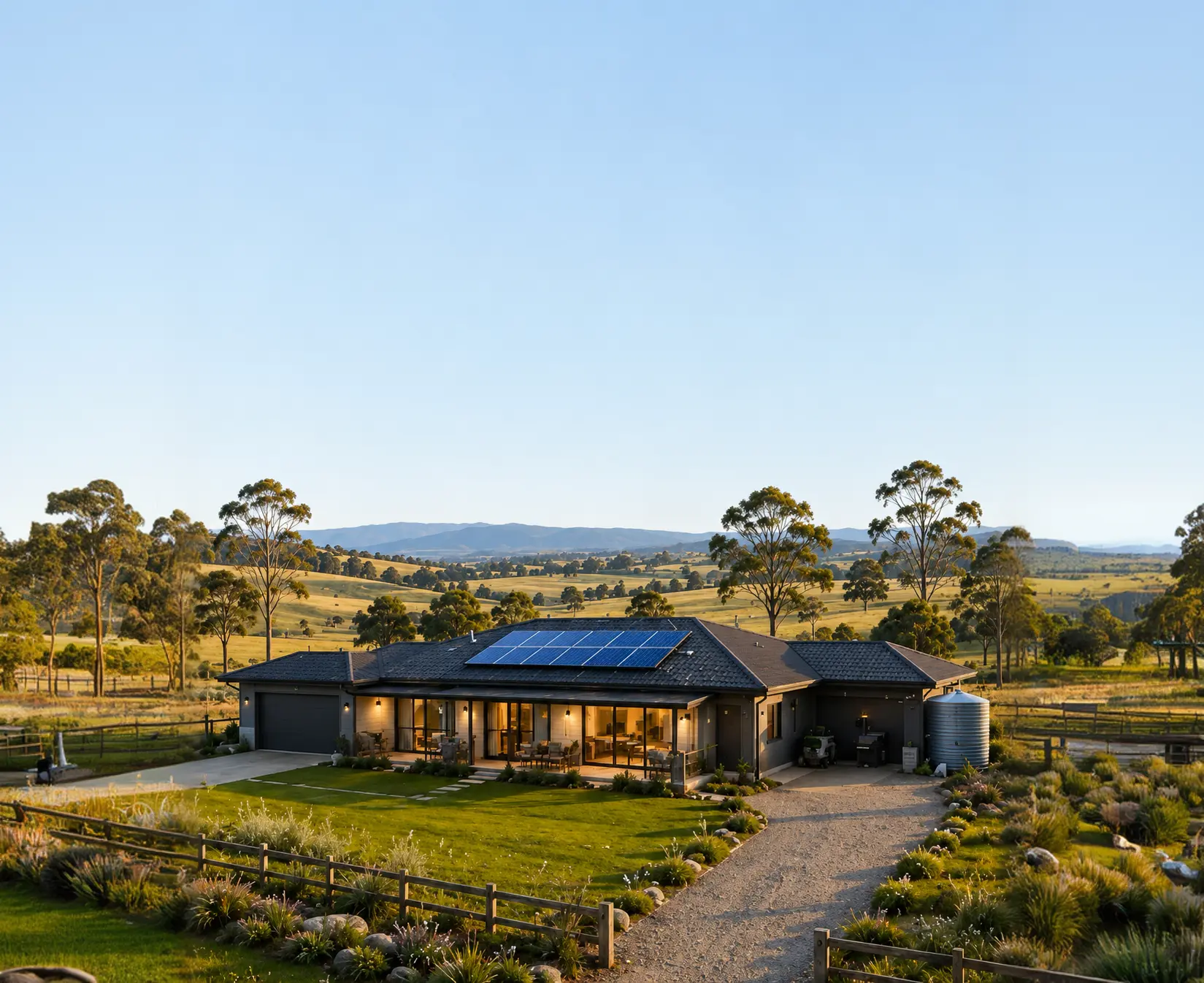
Off-Grid
20-49 kWh
Complete Power System
Homes, Farms, Station: Small Businesses